Platform
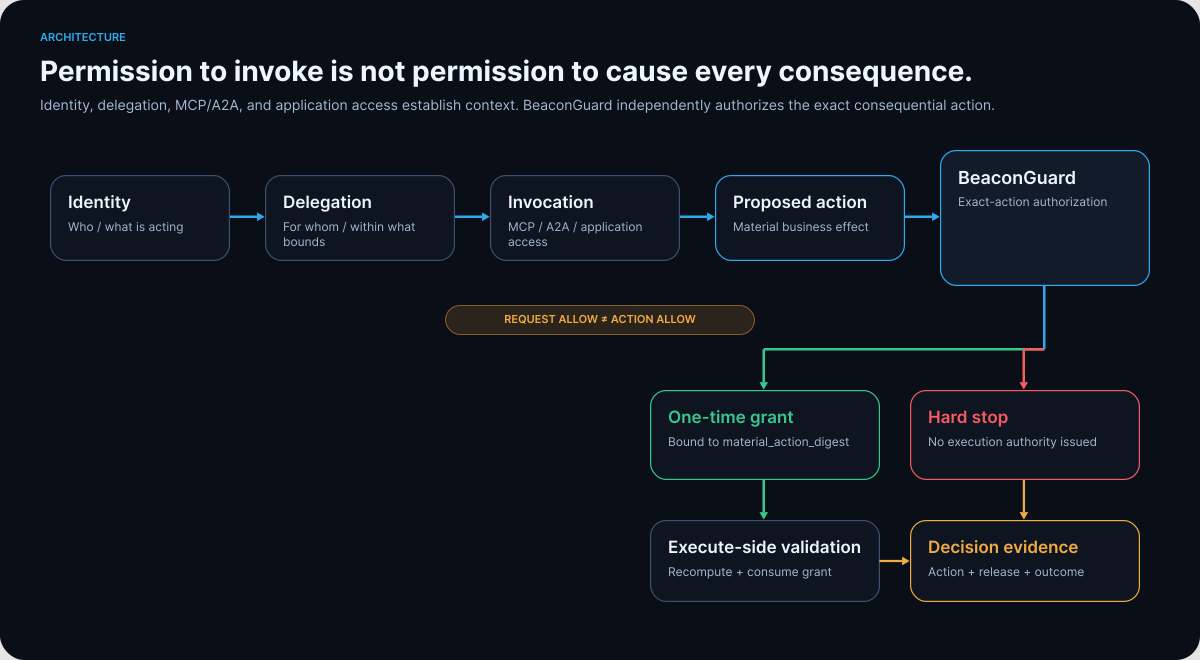
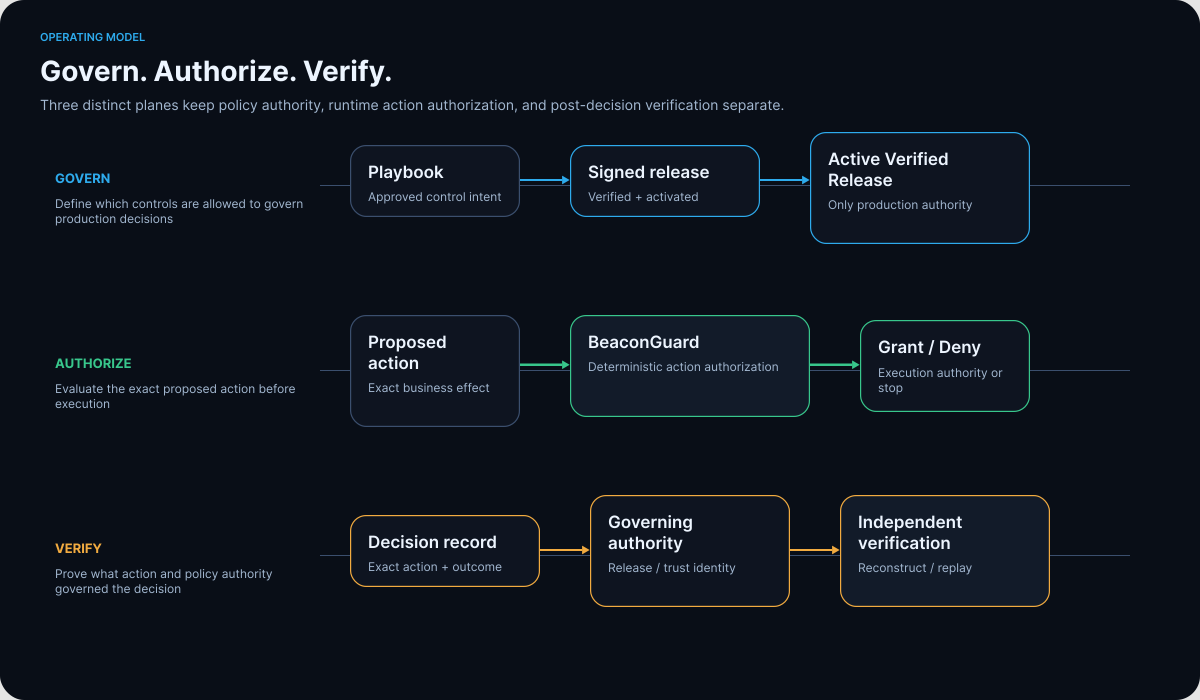
BeaconGuard is enterprise AI governance infrastructure that inserts a deterministic policy-control boundary between financial applications and AI/model endpoints.
What BeaconGuard Is
It is a runtime control plane that evaluates request context against centralized policy and returns explicit allow/deny decisions with full decision context.
BeaconGuard preserves decision evidence for later audit and incident review.
Where Financial Control Executes
Incoming request
Application sends normalized authorization context.
Compatibility layer
Non-native requests are governed and normalized before entering policy control runtime.
Policy control runtime
BeaconGuard evaluates in a bounded trust boundary and returns deterministic decisions.
AI execution
Only approved requests continue downstream.
Compatibility layer for non-native clients
Some applications do not natively emit the request structure BeaconGuard evaluates. In those cases, a governed compatibility layer can normalize requests before they enter the BeaconGuard control boundary.
The compatibility layer does not make policy decisions. It does not bypass BeaconGuard. BeaconGuard remains the policy authority, fail-closed boundary, and evidence-emitting control layer.
What BeaconGuard Is Not
BeaconGuard is not:
- A chatbot or assistant.
- An AI model host or training platform.
- A prompt-engineering framework.
- General-purpose monitoring or observability alone.
Core Platform Functions
Policy Control Plane
Distributes signed policy artifacts and policy identity to enforcement points.
Deterministic Enforcement
Applies policy consistently across time, environments, and request variations.
Evidence Emission
Records auditable outcomes and decision context for deterministic governance review.
Review Replay
Reconstructs historical decisions from policy state and request inputs.
Example workflow: AI-assisted financial dispute resolution
The enterprise risk
A financial operations team uses AI to summarize case history, draft analyst support text, or recommend next-step actions during payment disputes or account-action exceptions. LLMs are probabilistic systems and should not be relied on as the authorization boundary for sensitive financial workflows. If the model receives unauthorized context or outputs action guidance outside policy, the institution assumes unnecessary operational, financial, and control risk.
Where BeaconGuard fits
BeaconGuard sits between the financial application and the AI/model endpoint as a control and evidence layer. It evaluates request context against centralized policy, returns explicit allow/deny decisions with context, and preserves structured evidence for later security, risk, and audit review.
Failure handling
If trust assumptions, policy conditions, or request context are missing, malformed, or out of bounds, BeaconGuard fails closed before the request proceeds into the model path.
Why it matters
BeaconGuard governs whether AI interactions are allowed to proceed under policy at the request boundary. It narrows control ambiguity at that boundary and does not claim to eliminate downstream workflow, policy-authoring, signer, or model-quality risk.