
DEPLOYMENT
Deploy BeaconGuard where execution can still be stopped
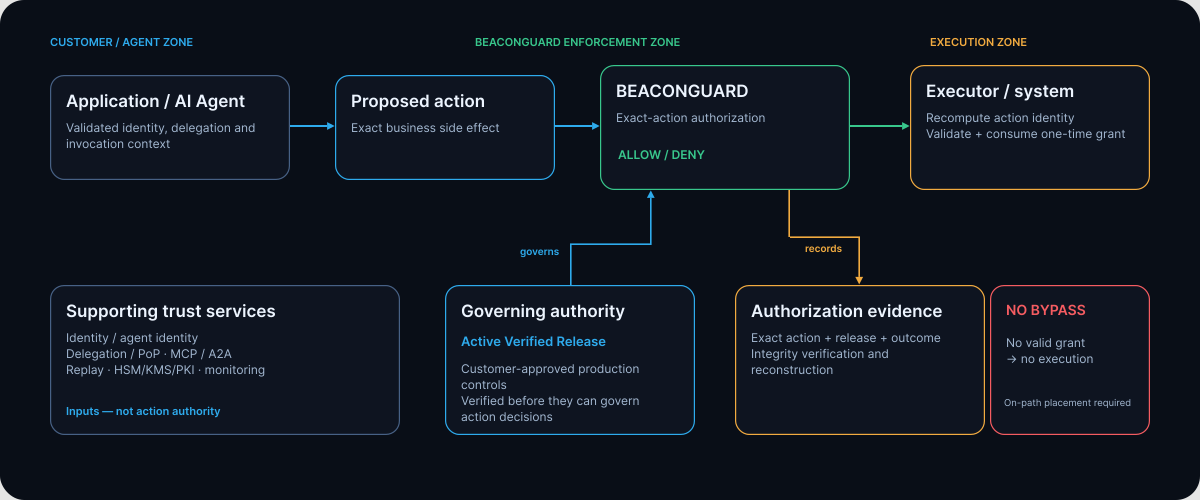
BeaconGuard belongs on the path between a proposed consequential action and the system that can create the side effect. The deployment invariant is simple: no consequential action reaches its executor without crossing BeaconGuard.
Deployment topology
PRODUCTION INVARIANTS
Three things must remain true
On-path enforcement
The application, agent, or protocol path cannot bypass the exact-action authorization decision before a consequential side effect.
Verified governing authority
Only customer-approved, cryptographically verified production controls are allowed to govern the action decision.
One-time execution authority
ALLOW issues authority bound to the exact action. The executor recomputes the action identity, validates the grant, and consumes it once.
INTEGRATION BOUNDARIES
BeaconGuard does not replace the systems around it
Customer-controlled context
Identity, agent/workload identity, delegation, MCP/A2A or application invocation, network placement, HSM/KMS/PKI, replay state, and monitoring remain bounded enterprise dependencies.
BeaconGuard-controlled decision
BeaconGuard consumes validated context, evaluates the exact material action under the governing release, returns ALLOW or DENY, and produces authorization evidence.
Existing execution systems
Downstream applications and systems of record continue to execute and record business state. They must validate BeaconGuard execution authority before creating the side effect.
QUALIFICATION
Controlled deployment qualification
BeaconGuard is completing controlled qualification across installation, runtime enforcement, recovery, evidence, and cross-platform deployment paths ahead of customer production deployment.