
SECURITY
The AI is not the security boundary
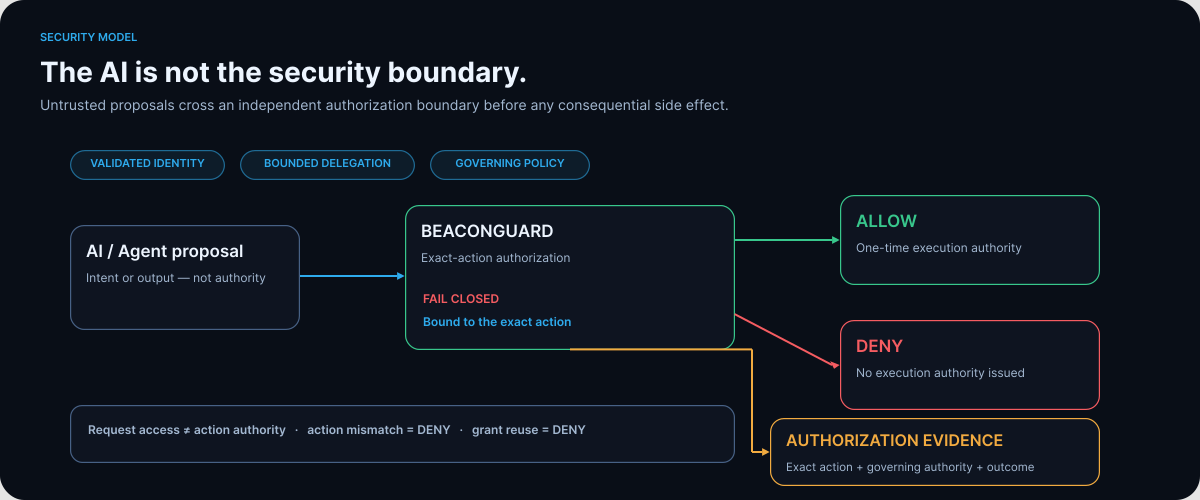
BeaconGuard assumes an AI or agent can be wrong, manipulated, compromised, or simply outside the authority required for a consequential action. The model's output is treated as a proposal—not permission to execute.
Four security properties
Access is not action authority
Identity, delegation, and tool access establish context and reachability. The specific consequential action is authorized separately.
Authorization is exact-action bound
If the action changes after ALLOW, execution-side recomputation detects the mismatch and refuses execution.
Execution authority is single-use
ALLOW can issue one-time authority bound to the exact action. Reuse, replay, expiry, or revocation fails closed.
No silent bypass
Deployment and executor design must keep BeaconGuard on path and reject missing or invalid action authority.
Trust is explicit
Production authorization depends on validated identity and delegation context, verified governing policy authority, exact-action binding, replay state, and an executor that enforces the grant contract. Missing or unverifiable required state does not fall back to permissive execution.
Security boundaries BeaconGuard does not replace
- Enterprise identity providers and source-system trust
- Network, TLS, host, secrets, and endpoint hardening
- HSM/KMS/PKI and customer signing-key custody
- SIEM, incident response, records management, and evidence-retention controls
- Security of the downstream executor and system of record
BeaconGuard does not claim to make a compromised operating system trustworthy, make the model correct, or replace IAM, API gateways, MCP/A2A platforms, SIEM, or GRC systems.