
Workflow Examples
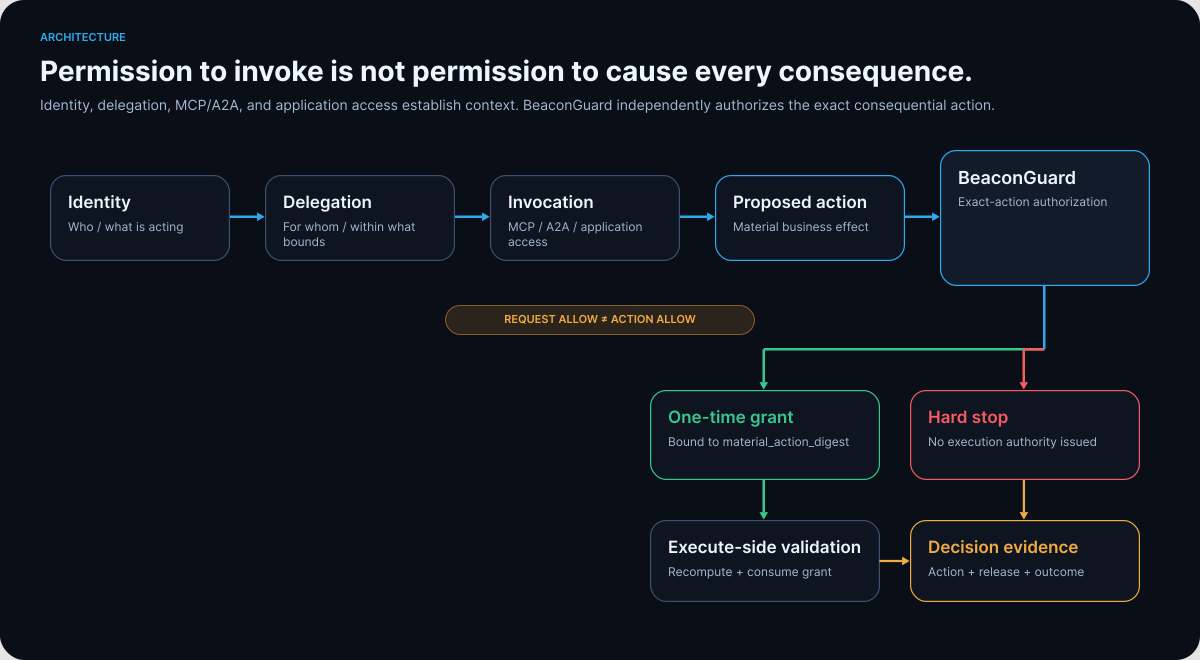
The same BeaconGuard architecture applies across industries: validate identity and delegated authority, admit the required invocation path, treat the AI result as a proposal, and separately authorize the exact consequential action before execution.
Shared sequence
Healthcare example
AI-assisted post-discharge scheduling
Request: A delegated discharge-operations agent is permitted to use a scheduling capability.
Proposal: Create a specific follow-up appointment for a specific patient, time, location, and service.
BeaconGuard decision: Authorize that exact scheduling side effect under current approved policy and authority context.
ALLOW: Issue one-time execution authority bound to the exact scheduling action.
DENY: No appointment is created.
Authority preserved: EHR, scheduling, clinical, and privacy systems remain authoritative in their own domains.
Financial example
AI-assisted fraud case disposition
Request: An authenticated agent can access a fraud case-management capability.
Proposal: Change a specific case disposition and initiate a defined customer-impacting follow-on action.
BeaconGuard decision: Evaluate the exact proposed side effect against actor/delegation, case context, policy, thresholds, approvals, tenant/environment, and current release authority.
ALLOW: One-time authority applies only to the bound action.
DENY: Case state and customer outcome remain unchanged.
Regulated automation example
Production configuration change
Request: An internal agent is permitted to invoke an operations tool.
Proposal: Modify a named production resource with specific parameters.
BeaconGuard decision: Bind and authorize that exact production change, not the agent's general access to the tool.
ALLOW: Executor verifies the action binding and consumes the grant once.
DENY or mismatch: No production change occurs.
The reusable rule
The protocol and business objects change by industry. The core authorization invariant does not:
Being able to reach a capability is not the same as being authorized to perform every consequential action that capability can produce.