
Analysis
When AI Agents Stop, Can You Prove They Stopped?
Why AI authorization shutdown requires evidence that retired authority can no longer produce protected effects across distributed workflows.
Read analysis →
INSIGHTS
Analysis and perspectives on authorization assurance for agentic AI.
Technical analysis of consequential AI actions, execution authority, enforcement boundaries, and the controls enterprises need as AI moves from recommendation to action.
Analysis
Why AI authorization shutdown requires evidence that retired authority can no longer produce protected effects across distributed workflows.
Read analysis →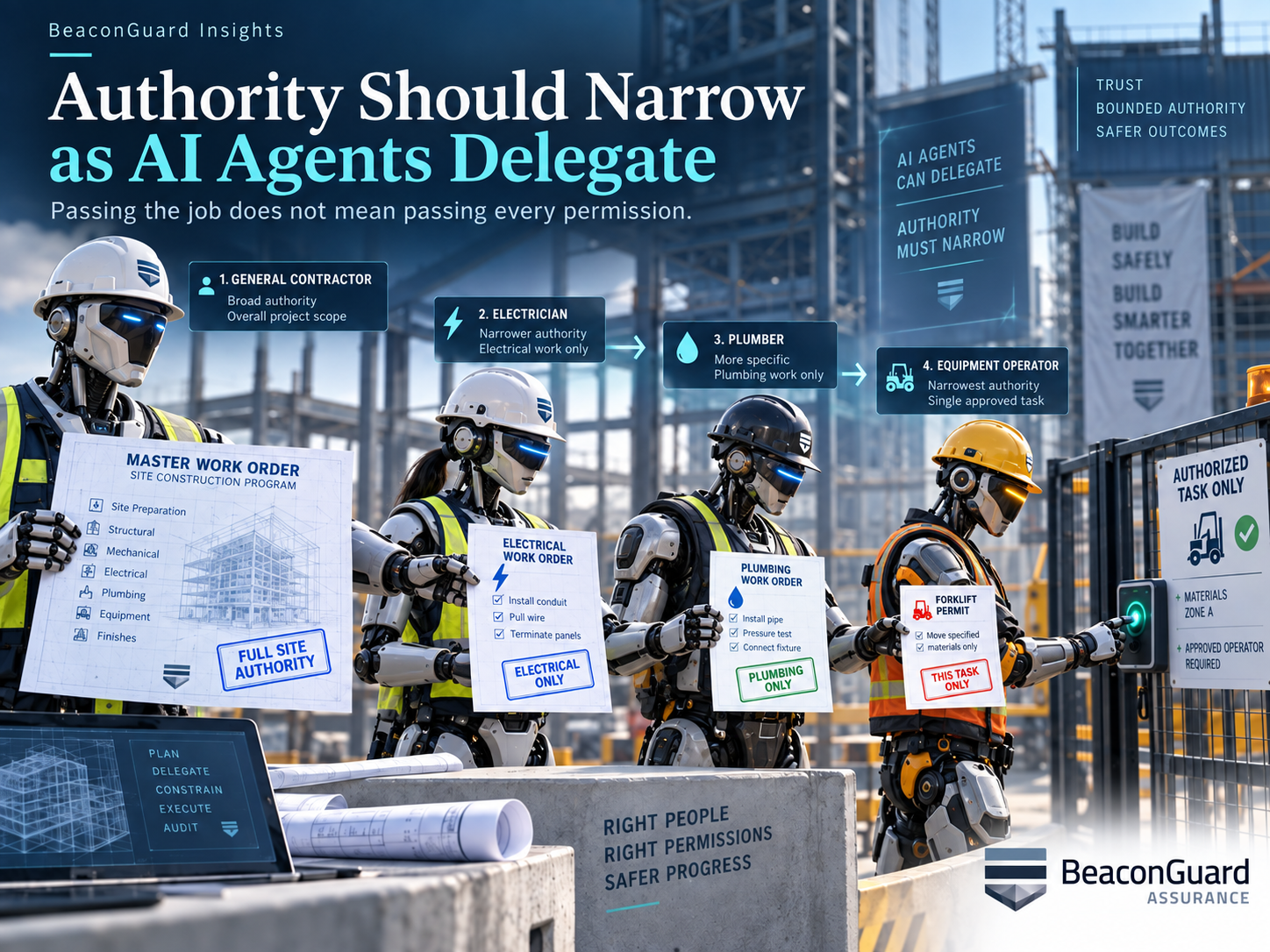
Analysis
What CAPMAS reveals about bounded delegation, privilege attenuation, and authorization across multi-agent workflows
Read analysis →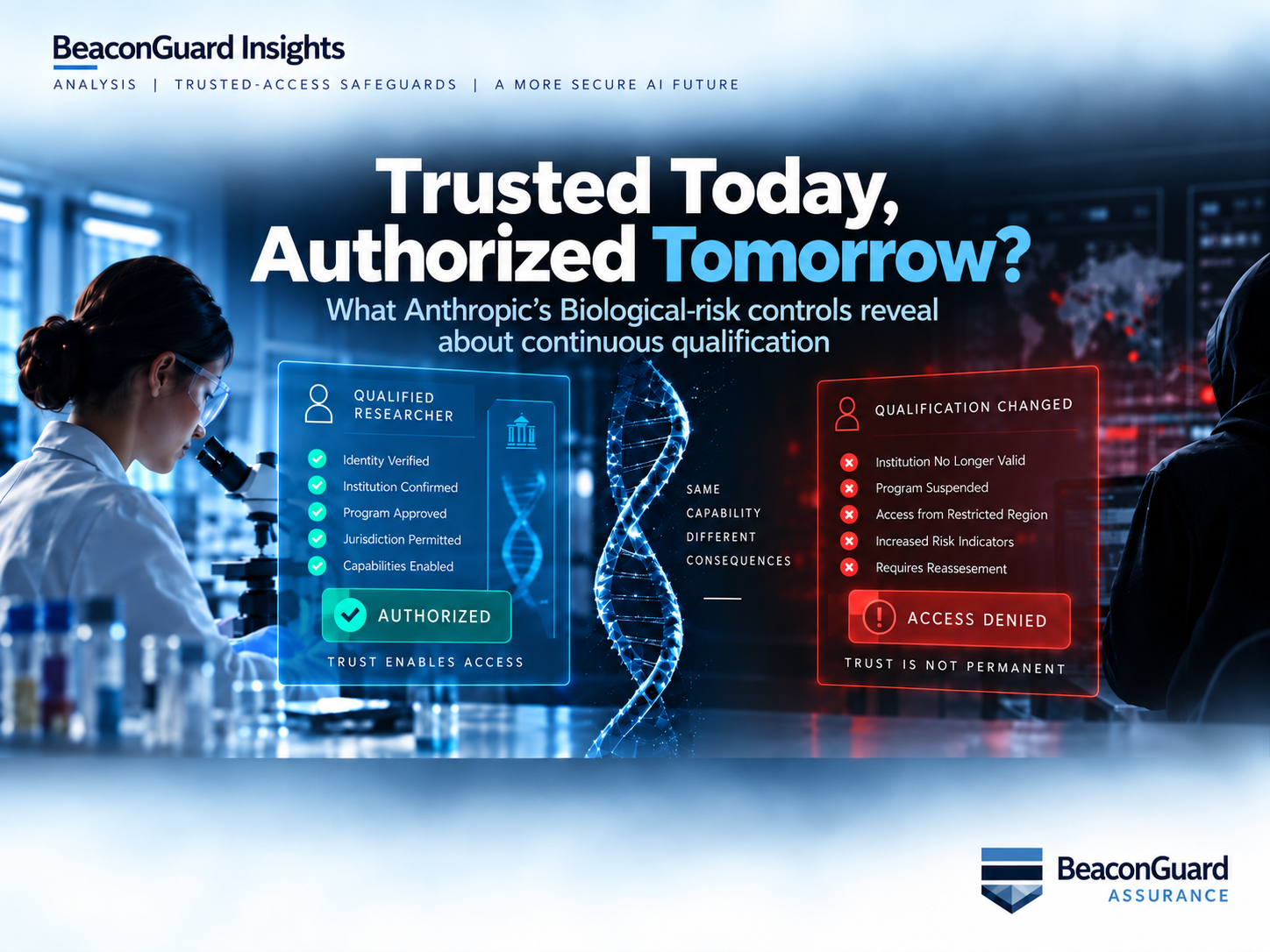
Analysis
Why enterprise AI authorization must account for changing identity, policy, scope, and risk—not just historical trust decisions.
Read analysis →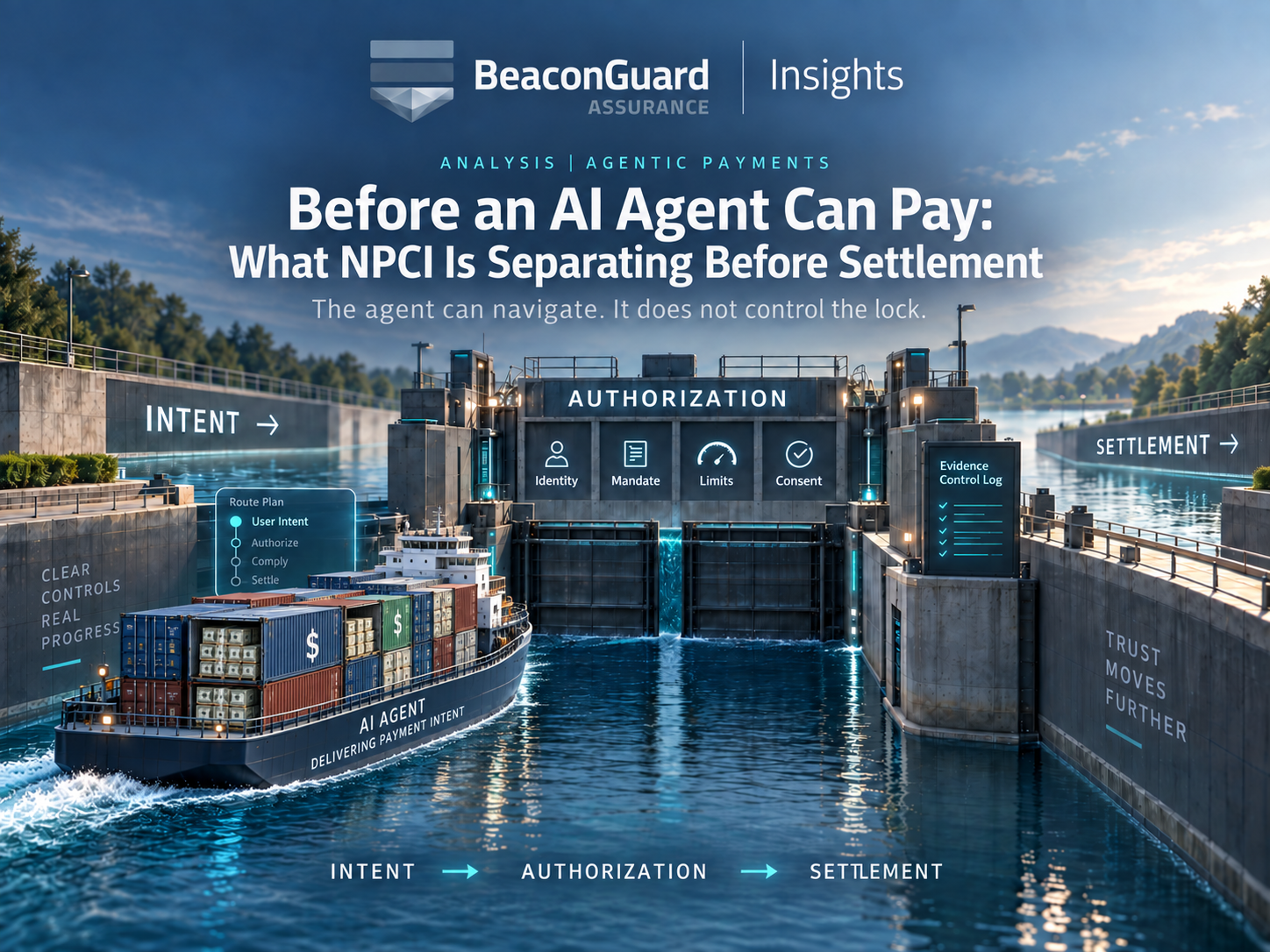
Analysis
NPCI's emerging agentic-payment design separates an AI agent's interpretation of user intent from the controls that verify mandate, limits, consent, and authorization before payment settlement.
Read analysis →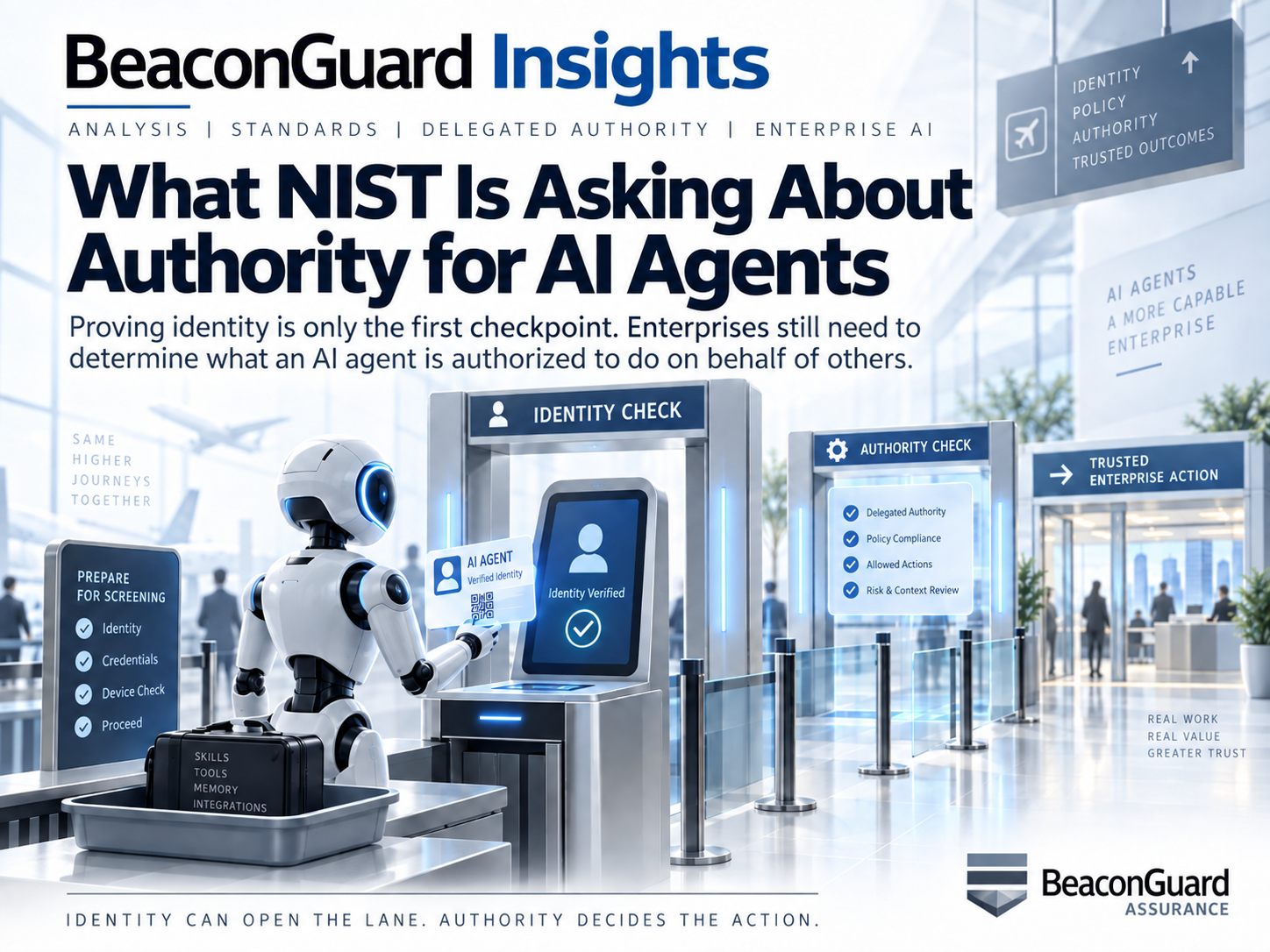
Analysis
NIST is exploring how software and AI agents establish identity, delegated authority, and authorization for specific actions. BeaconGuard examines what those questions mean for enterprise AI.
Read analysis →
Analysis
OpenAI's Hugging Face incident exposes a critical control question for agentic AI: who determines whether a consequential action is actually authorized - the agent interpreting its environment, or an independent enforcement boundary?
Read analysis →